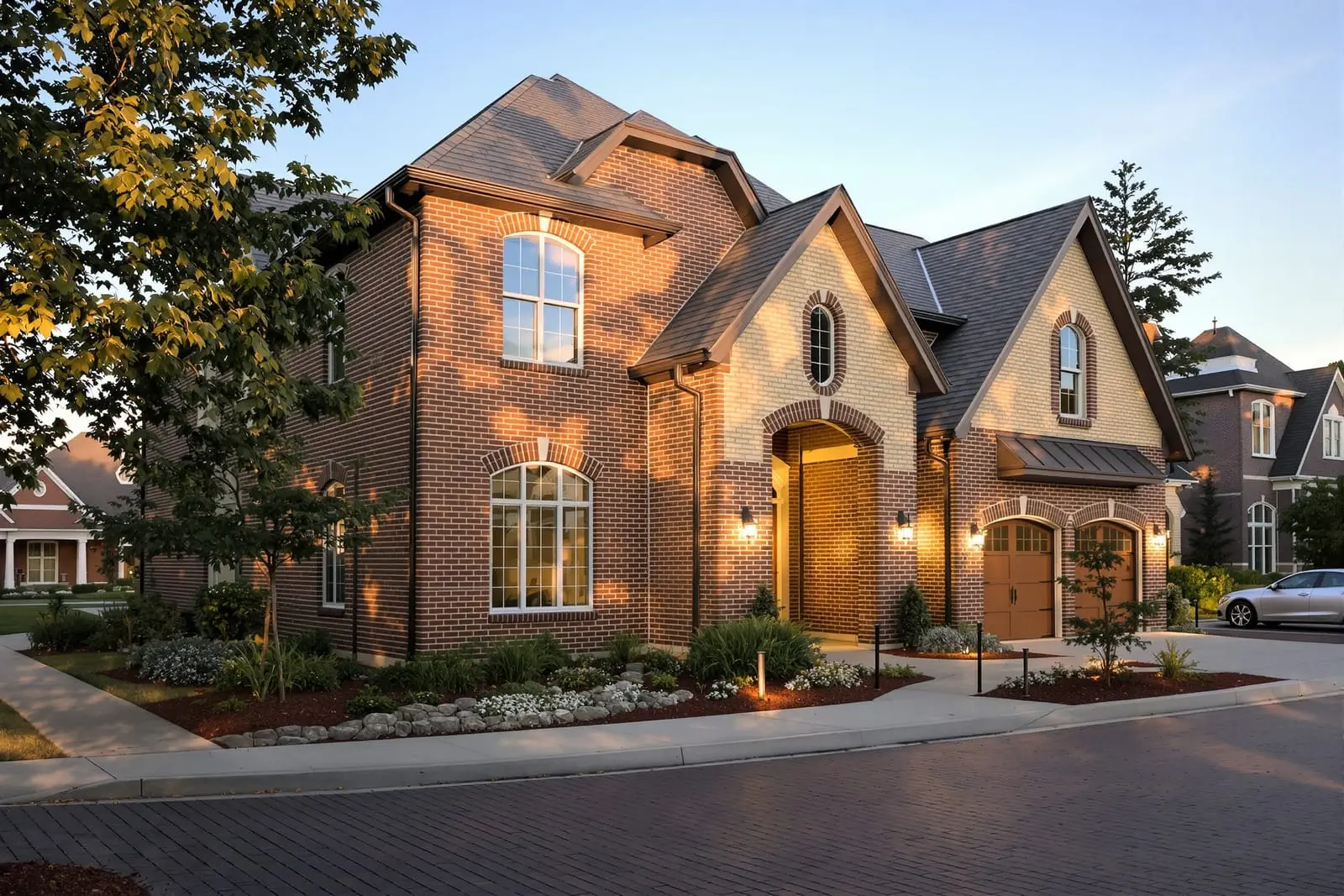
We install commercial brick veneer systems in Savannah, GA for large scale buildings that need the look of brick with engineered support. Our crews work with traditional anchored veneer and modern panel systems to meet project specs. We focus on substrate prep, moisture control, and clean detailing around all openings.
Vanguard Masonry Savannah provides professional commercial brick veneer throughout Savannah, GA and the surrounding area. Our licensed, insured crew delivers safe, clean, on-time work with a free estimate before anything begins. Call (912) 461-6709 or request your free quote.
Commercial Brick Veneer Systems for Savannah Properties
Commercial brick veneer gives you the look and durability of brick without the weight and structural cost of a fully load-bearing wall. For offices, retail centers, churches, schools, and mixed‑use buildings in Savannah, commercial brick veneer is often the most practical way to meet design goals, code requirements, and budget.
Vanguard Masonry Savannah focuses on veneer systems that can handle our coastal humidity, sudden storms, and long hot seasons. We pay close attention to water management behind the veneer, thermal movement, and long-term maintenance so owners are not paying for repairs a few years after construction.
Our team installs commercial brick veneer on new construction and on facade upgrades. We coordinate with general contractors, architects, and engineers to make sure the veneer, anchoring system, and substrate work together. Whether the wall behind the veneer is CMU block, steel stud with sheathing, or poured concrete, we select the right anchors, ties, and drainage components for that assembly and for Savannah’s climate.
The result is a cladding system that looks like full brick, meets wind and impact demands along the Georgia coast, and stays serviceable with straightforward maintenance.
How We Design and Build a Commercial Brick Veneer System
When Vanguard Masonry Savannah takes on a commercial brick veneer job, we start by confirming structural conditions and code requirements for the specific site. We look at wind exposure, building height, and the backing wall type. From there we work with your design team or provide practical options if you do not have an architect on board.
1) Substrate and air barrier: The backing wall must be structurally sound and plumb. On steel stud walls we verify that sheathing is properly attached, seams are treated, and a compatible air and water barrier is correctly installed and detailed at openings. On CMU or concrete, we prepare the surface so flashing and anchors can be installed without voids or irregularities that trap water.
2) Shelf angles and support: On multi-story buildings, we usually support brick veneer on steel shelf angles at each floor or at calculated intervals. These angles must be set to precise elevations, shimmed level, solidly fastened, and detailed with flashing and weeps. For Savannah, where we see frequent wind-driven rain, we increase attention to sealant transitions at those angles to keep water moving out of the wall instead of into it.
3) Anchors and ties: We choose anchor types and spacing based on the wall structure and local engineering requirements. For steel studs, that often means adjustable veneer anchors attached to studs through the sheathing at specified spacing, with movement slots to allow the veneer to expand and contract. For CMU or concrete, we may use dovetail anchors or expansion-type anchors. The spacing and layout are calculated so the veneer resists wind loads typical of coastal Georgia.
4) Cavity, insulation, and drainage: Between the backing wall and the brick, we maintain a clear cavity for drainage. In commercial work this is often 1 to 2 inches, depending on design. If insulation is part of the system, we coordinate its thickness so we do not choke off the cavity. We integrate vents, weep holes, and sometimes mesh or cavity drainage mats to move water down and out at base-of-wall and above windows.
5) Brick coursing and layout: We plan bonds, corner details, control joints, and intersection details before laying the first course. This avoids sliver cuts at window heads or odd transitions at building corners. On higher visibility storefronts in Savannah’s historic and business districts, we often mock up a sample wall so owners can see the brick color blend, mortar joint style, and overall look before full installation.
6) Mortar and jointing: We select mortar type and color to match performance and appearance requirements. Tooling of the joints is timed so the mortar seals correctly and sheds water; in our climate, poorly tooled or rushed joints show problems quickly. Clean-up is done with appropriate cleaners that will not damage the brick finish, especially on lighter color or textured units.
Material Options That Work in Savannah’s Climate
Commercial brick veneer is not one-size-fits-all. Vanguard Masonry Savannah helps owners and project teams choose brick and system components that stand up to our coastal conditions and still fit the look of the project.
Brick units: We install modular, utility, and oversized brick on commercial jobs. For office parks and medical buildings we often see consistent, smooth-face brick for a clean modern look. In areas closer to the historic district, clients may prefer tumbled or wirecut textures and blended colors to echo older masonry. We review absorption rates and finishes because highly porous or highly polished units behave differently with salt-laden air and frequent storms.
Mortar and joints: Joint style is not just aesthetic. Concave or V-joints tend to shed water better than raked or flush joints, which is important in Savannah where wind-driven rain is common. We usually steer commercial clients away from deeply raked joints on tall facades unless they understand the extra maintenance these can require.
Anchoring systems: Stainless steel ties and anchors cost more up front but hold up much better in a humid, occasionally salty environment. On projects within a few miles of the riverfront or marsh, we strongly recommend stainless hardware to avoid premature corrosion. Farther inland, hot-dip galvanized anchors might be acceptable depending on the budget and performance expectations.
Flashing and weeps: We use high-quality through-wall flashing at window heads, shelf angles, wide openings, and base-of-wall locations. In this region, cheaper flashing that becomes brittle in heat or separates from the backing wall causes expensive leaks a few years later. We prefer flexible, UV resistant materials with preformed corners where possible, along with properly spaced weeps that are not easily clogged by mortar droppings.
Sealants and transitions: Transitions between brick veneer and storefront systems, curtainwall, or siding are common failure points. We coordinate joint widths and backer rod sizes and use sealants rated for high movement and UV exposure. Correct sequencing with other trades is critical, so we work with the GC to make sure the brick veneer is not installed before substrates, flashings, or frames are ready.
Costs, Scheduling, and Common Problems to Watch For
Commercial brick veneer pricing in Savannah is driven by several real factors: building height, number of openings, complexity of detailing, material selections, and jobsite access. Taller buildings require more scaffolding and tie-in, which adds time and labor. Facades with many windows and jogs in the wall take longer than long uninterrupted runs because each opening needs careful flashing, lintels or shelf angles, and precise layout.
Material choices directly impact cost. Specialty face brick, blended colors, or oversized units are more expensive than standard modular brick. Stainless steel anchors and heavier flashing systems add to upfront costs but usually pay off in reduced long-term maintenance. Vanguard Masonry Savannah prepares estimates that show these trade-offs so owners can decide where they want to invest.
In Savannah, weather and humidity affect schedule and technique. The best periods for large veneer projects are typically late fall through early spring when temperatures are milder and afternoon storms are less frequent. We can work through summer, but we plan for earlier start times, mortar admixtures suited to heat, and protections to keep fresh masonry from drying too fast or being washed by sudden showers.
Common problems we see on commercial brick veneer jobs, especially on projects we are called in to repair, include: undersized or mislocated weep holes, missing end dams at flashing transitions, anchors spaced too far apart or not properly embedded in mortar joints, and lack of or poorly placed control joints. Each of these can lead to cracked veneer, water leaks inside, or corrosion of internal components.
To avoid these issues, we stick closely to the engineered anchor layouts and detail drawings, and we perform our own in-field checks as the wall goes up. On occupied buildings, we coordinate noisy and high-traffic activities, like scaffolding erection and brick delivery, to keep disruption to tenants and businesses as low as possible.
Why Savannah General Contractors and Owners Choose Vanguard Masonry Savannah
Commercial brick veneer is often one of the most visible parts of a building, and fixing mistakes after the fact is costly. Vanguard Masonry Savannah focuses on getting the system right beneath the surface so the facade looks good and performs well for decades.
We bring field experience from retail centers, schools, religious buildings, and professional offices throughout the Savannah area. That matters when you are tying new veneer into existing structures, working adjacent to active sidewalks and parking lots, or trying to keep a project on schedule with multiple trades stacked on the same elevation.
We involve our foremen early, not just at mobilization. Before brick shows up on site, we walk through details like shelf angle placement, window head and sill details, joint layout, and flashing transitions with the superintendent and, when needed, the design team. This reduces field conflicts and change orders. During construction, we keep mockups available as a reference so quality stays consistent even if crews change.
For owners and property managers, we explain what to expect long term from a commercial brick veneer system in our climate. That includes recommended inspection intervals, where to watch for sealant wear, and how to handle cleaning without damaging the brick or mortar. Clear expectations after turnover help preserve warranties and extend the life of the facade.
If you are planning a new commercial building or a facade upgrade anywhere in the Savannah region, Vanguard Masonry Savannah can review your drawings, point out potential veneer issues before they become problems, and provide a detailed proposal for commercial brick veneer that fits your schedule and budget.
“
Professional commercial brick veneer systems, done right the first time, quality materials, honest pricing, and results that last.
Vanguard Masonry Savannah
Commercial Brick Veneer Systems Across Our Service Area